Written by Pet Wellness Clinics. Medically reviewed by Dinaz Lahewala, DVM, Medical Director, Pet Wellness Clinics.
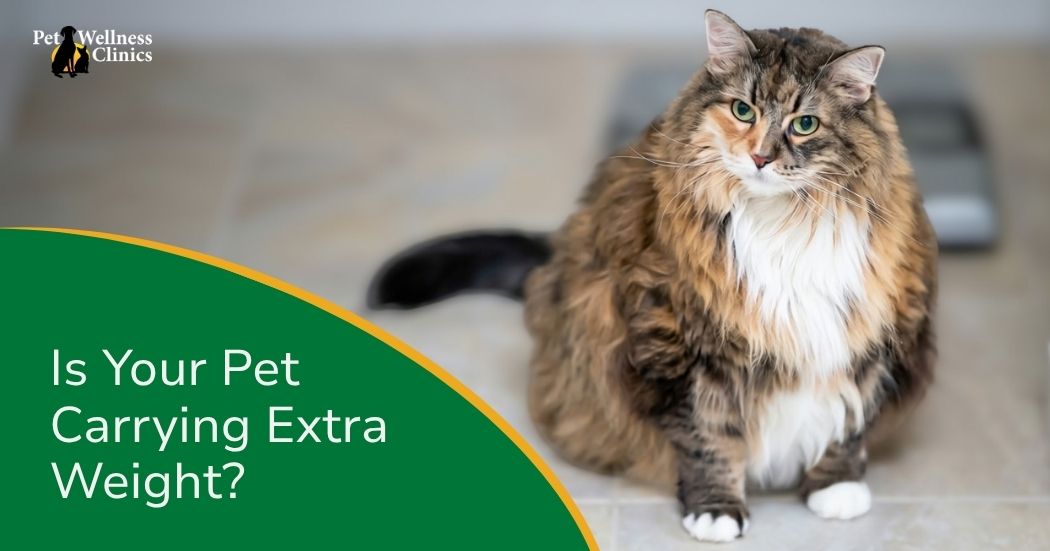
If your cat has a little extra waddle in her step or your dog's collar keeps getting snug, your pet is not alone. Our Indianapolis veterinarians see overweight cats and dogs every day. In fact, the Association for Pet Obesity Prevention (APOP) found that about 6 in 10 U.S. dogs and cats are above a healthy weight.
Here's the tricky part: a few extra pounds creep on slowly, and a round belly starts to look normal. APOP's 2025 survey found that veterinary professionals’ biggest challenge in weight conversations is that owners don't see their pets as overweight.
This isn't about how your pet looks, and it isn't about blame. Obesity in cats and dogs is a health condition and can be resolved with a plan and commitment. The good news? Weight is one of the few health risks you can do something about at home, starting today. This guide walks you through how to check your pet, why a healthy weight matters, and how to help them slim down safely.
The quickest way to tell if your cat or dog is overweight is the rib check: you should be able to feel the ribs easily with light pressure. The scale doesn't always tell the full story. A 12-pound cat might be perfect for a big-boned Maine Coon and too heavy for a petite tabby.
That's why our veterinarians use a hands-on exam and an evaluation scale referred to as the body condition score, which includes the rib check. On the 9-point scale, 4 to 5 is ideal, 6 to 7 is overweight, and 8 to 9 is obese. You can do a simple version at home in about a minute.
If your at-home check raises questions, schedule an appointment with one of our vets to discuss weight management for your cat or dog.
In cats and dogs, extra weight strains the entire body and can shorten their lifespan. In a 14-year study of Labrador Retrievers conducted by the Purina Institute, dogs kept lean lived about 1.8 years longer than their littermates.
A couple of pounds sounds small, but for a 10-pound cat, 2 extra pounds is like a 150-pound person carrying an extra 30. Overweight cats and dogs are more likely to develop:
Think of a healthy weight as one of the best gifts you can give your pet: more good years, and more comfortable ones.
Most weight gain in cats and dogs comes down to a simple imbalance: more calories in than they burn. Everyday habits tip the scale, such as:
Most pets should lose no more than 1 to 2% of their body weight per week. Slow and steady wins here. For a 15-pound cat, that's roughly a quarter pound a week at most.
A special warning for cat owners (and important for dogs, too): never put your cat on a crash diet or cut food drastically. When a cat with extra weight stops eating or loses weight too fast, fat can build up in the liver. This condition, called hepatic lipidosis or fatty liver disease, is life-threatening. If your cat skips meals, call us right away.
Sometimes we accidentally restrict food volumes so much that we also deprive them of nutrients and not just calories. It's important to reduce with guidance or consider a different food that helps with weight loss to ensure your pet receives all the nutrition needed.
Here's what a safe plan usually includes:
The "best cat food for weight loss" is the one that fits your cat's health, age and tastes, fed in the right amount. Our vets can help you choose.
Our Indianapolis veterinarians make weight management simple. At your pet's next visit, we can:
No judgment, ever. Just a clear plan and a team cheering you on.

10475 Crosspoint Blvd Suite 220
Indianapolis, IN 46256